






Understanding Modern Car Scanning: How Digital Diagnostics Pinpoint Engine Faults
Imagine turning the key in your ignition, ready for a smooth drive, only to be greeted by that ominous, glowing orange "Check Engine" outline on your instrument cluster. In the past, diagnosing a vehicle's mechanical issues resembled a game of expensive guesswork, requiring mechanics to manually dismantle components just to isolate a simple vacuum leak or a misfiring spark plug or Car Scanning.
Today, your luxury vehicle is essentially a high-performance computer on wheels, equipped with dozens of interconnected Electronic Control Units (ECUs) that continuously monitor everything from fuel-injection timing to cabin humidity. When an issue arises, guessing is no longer an option.
Utilizing advanced Car Scanning technology allows automotive technicians to peek directly inside your vehicle's digital brain, reading real-time sensor data and pinpointing complex faults within seconds.
Understanding how this digital diagnostic ecosystem works doesn't just demystify your dashboard; it empowers you to make informed maintenance decisions, saves you from catastrophic engine failures, and ensures your premium vehicle continues to perform exactly as the factory engineered it.
What Happens During a Professional Modern Car Scanning?
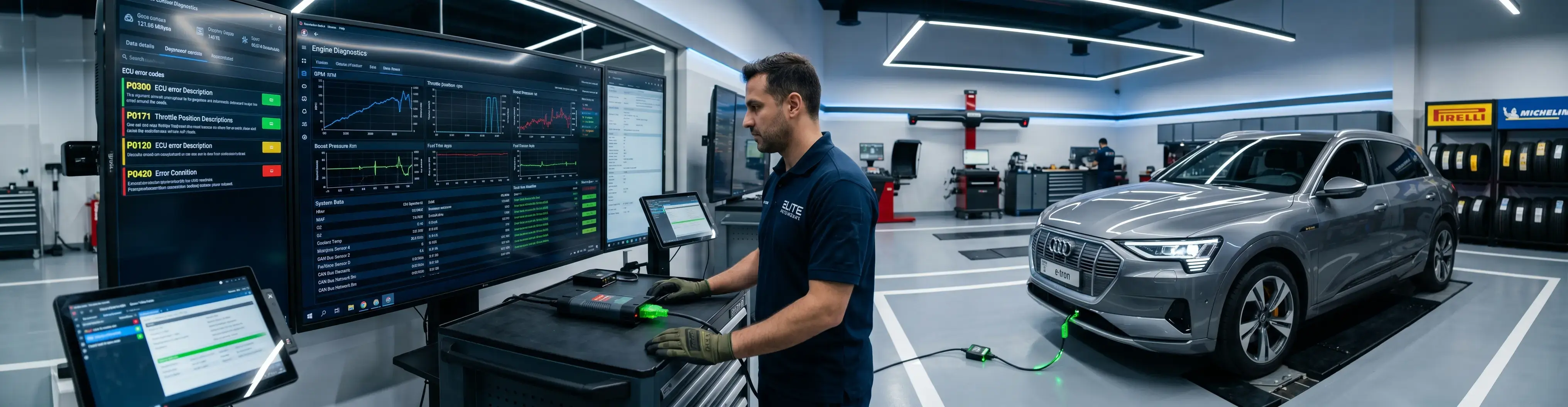
When your vehicle undergoes a professional computerized inspection, it bridges the gap between mechanical engineering such as Car Scanning and digital software. The process begins by connecting a high-tier, specialized diagnostic scan tool to your vehicle’s On-Board Diagnostics (OBD-II) port, which is typically located right beneath the driver-side dashboard.
During this digital handshake, the scan tool comprehensively queries the primary control modules, including the Powertrain Control Module (PCM), Transmission Control Module (TCM), and Anti-lock Braking System (ABS).
The scanner downloads a comprehensive report containing data snapshots, system operational histories, and specific fault markers, giving the technician a holistic view of the vehicle's electrical and mechanical health without loosening a single bolt.
Decoding the Modern Car Scanning: Intermittent Faults vs. Hard Failures
The core objective of any comprehensive Car Scanning session is to decode the specific Diagnostic Trouble Codes (DTCs) that triggered your dashboard warning light. These standardized alphanumeric codes act as an direct index to the underlying issue. For example, a code like P0300 points straight to a random engine misfire, while a P0420 indicates that catalytic converter efficiency has fallen below an acceptable operating threshold.
However, a professional technician looks far beyond the basic code description. Advanced diagnostics categorize faults into two primary fields:
Active Hard Failures
A hard failure means a component has fundamentally broken down or failed completely. For example, if an oxygen sensor's internal heating element snaps, it will continuously generate an active code that cannot be cleared until the mechanical part is physically replaced.
Ephemeral Intermittent Faults
Intermittent faults are highly elusive issues that trigger occasionally under very specific driving conditions—such as a loose electrical ground wire that loses contact only when driving over a rough road.
Professional scan tools capture critical "freeze frame" data alongside these codes. This snapshot records the exact engine RPM, coolant temperature, vehicle speed, and fuel trim values the precise millisecond the fault occurred, allowing the technician to easily recreate the exact scenario and solve the underlying issue.
Why Generic Code Readers Can't Match Specialized Car Scanning
With basic handheld OBD-II code readers readily available on consumer markets, many car owners assume they can accurately run their own vehicle diagnostics at home. While a budget pocket scanner can easily pull basic powertrain codes, it only scratches the absolute surface of a modern luxury vehicle’s complex digital architecture.
Consumer-grade code readers are strictly limited to generic OBD-II emissions codes. They are completely blind to manufacturer-specific modules controlling complex sub-systems like adaptive air suspension layouts, matrix LED headlight arrays, radar-guided cruise control modules, or climate control air distribution blending doors.
Furthermore, a specialized workshop diagnostic platform does far more than just read text codes; it performs dynamic, bi-directional testing such as Car Scanning. A certified technician can command the scan tool to manually cycle individual fuel injectors, actuate the variable valve timing solenoids, or run a pressurized test on the evaporative emissions loop.
This level of granular control lets the mechanic isolate the exact root cause of an issue within minutes, preventing you from wasting money on unnecessary part replacements.
How Proactive Car Scanning Prevents Expensive Roadside Breakdowns
Waiting for a dashboard warning light to turn on before booking a diagnostic check is a reactive approach that can expose you to sudden roadside breakdowns. Many mechanical components begin to degrade long before they cause a hard failure or trigger a bright warning light on your instrument cluster.
By integrating a comprehensive digital diagnostic such as Car Scanning check into your routine preventative maintenance schedule, you can catch hidden wear early. For instance, a technician looking at live fuel trim data values during a routine check can spot a gradual lean condition caused by a slightly clogged fuel filter or a tiny intake vacuum leak.
Addressing these minor imbalances early ensures your engine operates with optimal combustion efficiency, protects your expensive catalytic converters from fuel contamination, and completely prevents minor, hidden glitches from cascading into catastrophic component failures on the highway.
Role of Software Updates and Car Scanning
Modern automotive service centers don't just use digital scanning to find broken parts; they also use it to maintain and upgrade your car's operating software. Just like your smartphone or laptop, your vehicle's manufacturers regularly release critical firmware patches designed to fix software bugs, optimize engine efficiency, improve automatic transmission shift quality, and resolve false-alarm diagnostic codes.
During a professional Car Scanning session, the diagnostic platform cross-references your vehicle's current firmware versions with the manufacturer's central live database. If a newer software variant is available, the technician can flash the updated code directly onto the relevant module.
Additionally, when high-tech components like fuel injectors, steering racks, or electronic throttle bodies are replaced, they must be digitally adapted and coded to the central gateway module. Without this critical software initialization step, your car's computer will refuse to recognize the new hardware, causing the vehicle to run poorly or enter a restricted "limp home" protection mode.
Conclusion- Car Scanning
The days of diagnosing vehicle issues through guesswork, intuition, and trial-and-error part swaps are officially over. Modern automotive care such as Car Scanning relies heavily on digital precision, software expertise, and specialized diagnostic systems designed to interface seamlessly with your car's computing network.
Investing in regular, high-level computerized diagnostic scanning gives your vehicle an unmatched level of care. It eliminates repair uncertainty, maximizes daily fuel efficiency, ensures all advanced safety systems remain completely calibrated, and protects your long-term financial investment.
Don't ignore a hidden dashboard code or wait for an unexpected mechanical failure to disrupt your busy schedule. Schedule a comprehensive, professional vehicle scan today, and let certified technicians optimize your engine's performance with total digital clarity.
FAQs- Car Scanning
What is the difference between a generic OBD-II reader and a professional car scanning tool?
A generic handheld OBD-II reader only scans for basic, government-mandated emissions and powertrain codes (generic OBD codes). Professional workshop diagnostic equipment, however, runs a comprehensive bi-directional scan capable of deeply interrogating manufacturer-specific modules. This allows mechanics to access advanced, factory-level sub-systems like adaptive air suspension, advanced driver-assistance systems (ADAS), and individual luxury comfort modules.
Can a professional computerized car scanning session clear a Check Engine light permanently?
A digital scan tool can reset or clear a dashboard warning light, but it will only stay off permanently if the underlying mechanical or electrical fault is actually repaired. If the scan tool clears a code without fixing the root cause (such as a failed sensor or an internal vacuum leak), the vehicle's computer network will quickly detect the problem during its next drive cycle and illuminate the warning light again.
What does it mean if my car scanning report shows an "intermittent" fault code?
An intermittent fault code means the issue is not constantly present. It usually records a glitch that occurred under highly specific driving conditions—such as a brief voltage spike, a loose electrical wiring harness ground, or a valve sticking only when cold. Advanced vehicle scanners capture "freeze-frame" data, documenting exact variables like engine RPM and temperature from the precise millisecond the temporary error occurred, allowing mechanics to trace it accurately.
Why is a car diagnostic scan necessary if my car is driving perfectly fine?
Many electronic and emissions components begin to degrade or fall out of factory calibration parameters long before they cause noticeable driveability issues or trigger a hard dashboard warning. Proactive electronic diagnostics allow technicians to read live sensory data streams, helping them identify minor issues like a slightly clogged fuel line or an uneven air-fuel mixture, saving you from sudden highway breakdowns.
Why do new automotive parts need to be programmed or coded after a vehicle scan?
Modern vehicles operate on a highly protected, interconnected computer network. When a high-tech component—such as a new transmission control module, an alternator, a steering rack, or a fuel injector—is physically installed, it must be digitally registered, adapted, and programmed to your car’s central gateway module. Without this critical software initialization step, the central vehicle computer will refuse to communicate with the new hardware, often triggering an instant warning light or putting your car into a restricted "limp home" safety mode.
Leave a comment
Your email address will not be published. Required fields are marked *