




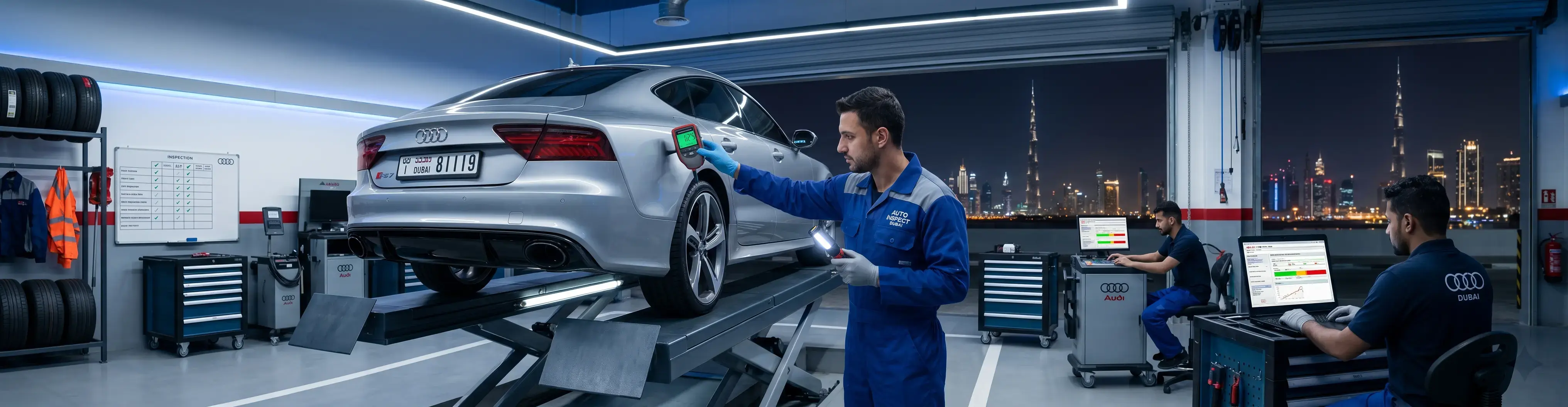


Buying a pre-owned premium car without a full physical evaluation is one of the riskiest financial gambles you can make
Getting a professional Pre-purchase car inspection buyers can rely on is the best way to avoid having terrible buyer's remorse in a market that changes quickly. Taking a methodical approach to evaluating a used car turns the buying process from an emotional guessing game into a smart, data-driven choice. This way, you can be sure that your new investment will give you pure driving pleasure instead of endless garage bills.
Professional Pre-purchase Car Inspection
If you open the hood of a used car and see an engine bay that looks like it was just taken off the assembly line, that might be a sign of careful ownership. Professional Pre-purchase car inspection, on the other hand, are wary of suspiciously clean engine compartments. A car that has been well taken care of may have a clean engine, but dishonest sellers often use high-pressure steam cleaning and shiny silicone sprays right before a showing to get rid of active, slow-dripping fluid leaks.
A fresh detail can easily hide a leaky valve cover gasket, a weeping power steering pump, or a failing water pump for a few hours. To see past this trick for looks' sake, an inspector has to dig deep into the engine block's lower, harder-to-reach parts. A high-intensity inspection light is used to look in the deep holes under the intake pipe, around the oil pan gasket, and along the main crankshaft seals.
They also look for dried chemical residue, calcified coolant crusts, and stains on the plastic under the shields that aren't the original color. No matter how much degreaser was put on the top covers, these marks show that a fluid leak has been going on.
Checking the Structural Integrity: Pre-purchase car Inspection
It is possible to fix a car that has been in a big accident so that it looks perfect on the outside, but the safety features that make it safe may be permanently damaged. When you check a car's structural integrity, you have to look past the plastic bumpers and at the high-strength steel frame that saves you in case of an accident.
An inspector can use a digital paint for Pre-purchase car inspection to find out exactly how thick the paint is on each metal panel. When results are unusually high, it means that body filler (Bondo) was used to fix a panel a lot before it was replayed.
The inspector looks at the main chassis rails, floor pans, and inner suspension towers as he moves under the car. They look for strange metal swirls, factory undercoating that is missing, or rough weld beads that aren't from the factory.
A hydraulic frame machine can bend and straighten a car's frame rails, but this seriously weakens the steel's structural integrity. This means that if the car gets into another accident, it won't protect you safely.
Live Electronic Scanning: Pre-purchase car inspection
Modern high-end cars are very smart. Dozens of Electronic Control Units (ECUs) constantly run internal tests to control everything from active safety systems to emissions outputs. When an internal monitor fails or finds a problem, it stores a Diagnostic Trouble Code (DTC) in its computer memory right away. Sadly, any simple handheld code reader can be used to erase these codes by hand, which can briefly turn off the "Check Engine" light on the dashboard for a test drive.
This is the reason why a full Pre-purchase car inspection in Dubai must include a full electronic scan using factory-level diagnostic software. These more modern scanners do more than look for lights that are on. They also look at the vehicle's deeper readiness monitors and historical logs.
Immediately, the scan tool will show that the car's monitors are in a "Not Ready" state if the seller recently cleared a group of important fault codes to hide a failing catalytic converter or an airbag module glitch. It lets the inspector know that the car's computer's past has been erased on purpose. The system will have to be re-evaluated after a long drive cycle to see which hidden codes come back.
Checklist for the Road Test: Checking the Brakes, Steering, and Transmission: Pre-purchase car inspection
After the physical Pre-purchase car inspection, the car must be put through a full, real-world road test. This is the only way to find any hidden mechanical problems that would show up anyway. For a real road test, you need to find a wide road where the car can safely go from slow to fast, make sharp turns, and stop suddenly.
Your dynamic road test plan should pay special attention to these three main points:
How responsive the brake system
Raise your speed to a safe level for the highway, check your mirrors, and slam on the brakes hard. Without pulling too far to one side, the car should stop in a straight line. If you can feel the steering wheel shaking or the pedal moving under your foot, it means that the brake rotors are bent. Pay close attention to any high-pitched squealing or deep grinding sounds. These can mean that the brake pads or calipers are totally worn out.
Stable Steering and Tracking
Take your hands off the steering wheel for a short time on a straight, flat stretch of road. The car needs to go straight ahead. If it moves to one side right away, either the wheels aren't lined up right, or the front suspension control arms are worn out. While parking, slowly turn the wheel all the way to the left and right. If you hear loud popping, clicking, or binding sounds, it means that the CV joints or steering rack are worn out.
Quality of Transmission Shifting
As the gearbox goes through the gears, pay close attention to how it acts. There shouldn't be any harsh jumps, loud clunks, or sudden hesitations when shifting gears in an automatic transmission. If you see the engine going very high while the car is having trouble picking up speed, this means that the clutches inside are slipping. For manual transmissions, make sure that each gear engages smoothly and without grinding. Also, make sure that the clutch pedal feels firm and doesn't engage at the very top of its journey.
Conclusion - Pre-purchase car inspection
Buying a used car should be an exciting event, not a stressful gamble with lots of unknown technical risks. You have full control over the buying process when you use a strict Pre-purchase car inspection checklist that includes things like going past a freshly cleaned engine bay and checking for cleared codes, checking the structural frame, and giving the car a full road test.
When you pay for a professional, independent Pre-purchase car inspection Dubai service, they give you a thorough, unbiased health report that you can use as proof in court. If the check shows some light damage, you can use that information to get a good discount on the total price. You can safely back out of a bad deal if it shows major structure or transmission failure. Don't waste your money on guessing; instead, make sure that the next car you buy is a safe, reliable, and truly rewarding investment.
FAQs- Pre-purchase car inspection
Can a seller refuse me to get an independent pre purchase car inspection Dubai service from a third party?
A refusal to allow a mobile inspection is a huge red flag that the seller may be hiding a major structural or mechanical defect. A seller who has nothing to hide would be happy to allow a mobile inspection, or to let you bring the vehicle to an reputable mechanic.
What is the difference in a cosmetic repair of a body and a structural frame damage?
Cosmetic damage is a superficial problem that can be easily repaired (like bumpers and fenders). This does not affect the safety of driving. Structural damages affect the core of the car (like chassis rails and floor pans); they can cause the car to not handle properly or protect you from a crash if welded or bent incorrectly.
How can an inspector determine if the odometer was illegally rolled forward?
Advanced scan tools compare the dashboard mileage to hidden internal control units such as the Transmission Control Module or ABS brakes. These hidden modules would still show the higher mileage if a rogue dealer only changed the dashboard cluster. This fraud is exposed instantly.
Why should I have an inspection done if my vehicle's history is clean?
Only accidents that have been reported to the police, insurance companies or traffic departments are included in history reports. The history report will remain clean even if the previous owner paid out of pocket to repair structural damage at an uncertified shop in order to avoid filing a claim.
Does a mobile inspection of a car before purchase have the same value as placing it on a lift in a workshop?
Mobile inspections cover 85% to 90% vital checks. This includes full diagnostics and paint depth tests, as well as a road test. A workshop lift allows for a clear view of the undercarriage, allowing you to detect tiny leaks in oil pans, worn suspension bushings and hidden steering play.
Leave a comment
Your email address will not be published. Required fields are marked *