




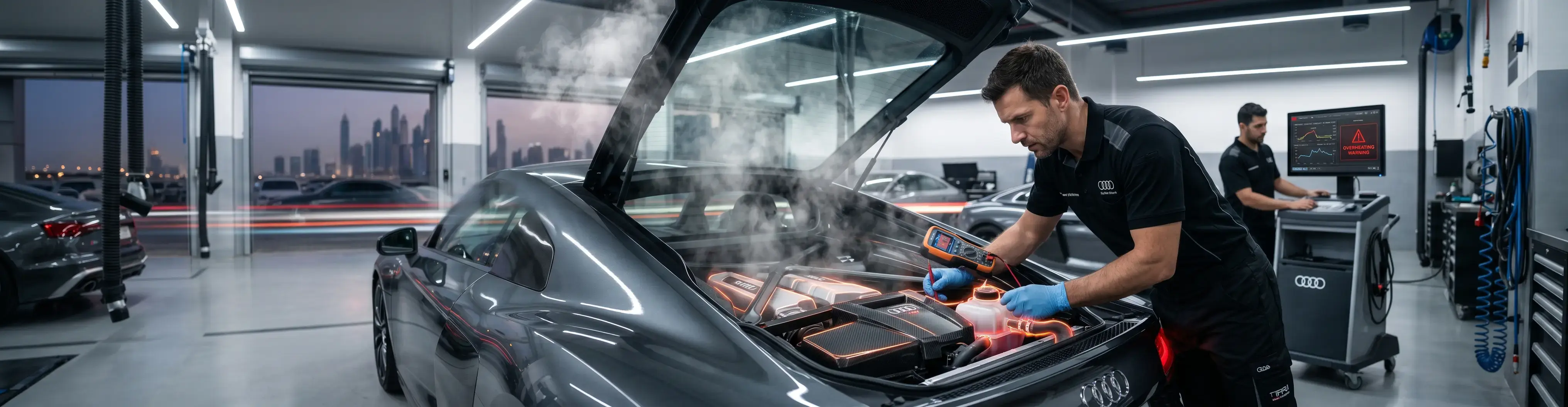


Engine Overheating Guide 2026 - How Long Can I Drive Without Coolant?
Many drivers are tempted to drive a few extra kilometers in order to reach their destination. If your engine overheating and is out of fluid, asking for how long you can continue driving without it is a gamble. The clock will tick down seconds rather than minutes if the coolant has been lost. Your engine is forced to operate in an environment where temperatures can soar above the maximum thresholds of ambient desert temperatures.
Modern engines can be destroyed in less than 60 seconds if they are deprived of fluid. The only way to protect your vehicle against sudden, irreversible mechanical deaths is by understanding the role your cooling system plays and the main causes of engine overheating that UAE drivers experience daily.
Terrible costs of a gusted head gasket - Engine Overheating
By driving a car without coolant, you remove the only mechanism that regulates your engine's internal temperatures such as stop from engine overheating. Localized metal temperatures will skyrocket if fluid is not circulated through the engine core. The head gasket is the weakest part of your powertrain. The head gasket is a high pressure seal that separates combustion gases, oil and coolant loops from each other.
Head gasket will be blown out when the aluminum cylinder heads swell or warp due to extreme heat. The seal will fail, and engine oil, residual fluids, and other substances will mix to form a sludge that can destroy the engine's internal grease.
Damage will only get worse if you keep running the engine beyond this point. The iron or aluminum engine blocks themselves can develop stress cracks due to extreme thermal expansion. It is impossible to repair, weld or machine a cracked engine block.
This mechanical failure can be fatal. Without lubrication or cooling, the pistons will swell in their cylinders, causing them to friction-weld against the cylinder walls. This can completely stop the engine. A simple leak repair can quickly snowball into a massive bill for an engine replacement.
Thermostats and water pumps are common failure points - Engine Overheating
The interconnected components of the cooling loop in the automobile are key to understanding the causes for engine overheating that UAE drivers face. The system relies on perfect harmony to dispel heat. A failure in one component can lead to the circuit losing pressure or fluid quickly.
Thermostats that are stuck closed
The thermostat is a thermal gatekeeper. It remains closed until the engine reaches its operating temperature and then opens to allow fluid flow to the radiator. The thermostat can become permanently closed due to internal spring wear or mineral scaling. The coolant is trapped inside the engine block. This bypasses the radiator cooling loops, causing a sudden overheating event.
Water Pump Bearing Failure
The water pump is an integral part of the cooling system. It uses an impeller inside to push fluid continuously through the engine galleries. The extreme heat in the Middle East places a great deal of stress on the internal bearings and seals of the water pump. The pump's ability to circulate fluid is compromised when these seals weep and dry up, or if the drive belt slips.
Leaky Radiators & Split Hoses
The delicate fins of the automotive radiators are made from aluminum and the end tanks from plastic. These materials are susceptible to damage by road debris and vibration. Rubber radiator hoses become brittle and crack under pressure when exposed to extreme temperatures under the hood. Under pressure, a single cracked radiator tank or split hose can bleed your entire coolant under pressure in a matter of moments.
When temperature scales spike, what to do | Engine Overheating
The decisions you make within the first 30 seconds can determine if your engine survives a sudden emergency engine overheating.
Step One: Shut down the AC and Turn on the Heater
Step two: Shut down the air conditioning system immediately to relieve the engine of heavy loads. Set your dashboard heater at its highest temperature and fastest fan speed. This is uncomfortable but forces the heater core into acting as a second radiator and drawing heat away from your engine block.
Step 3: Turn off your engine
Don't try to drive to the exit.
Step 4: Never touch the Radiator cap
Open the hood latch while inside the car, but keep the hood closed until the steam is released. Under no circumstances should you attempt to open or loosen the radiator cap, or the coolant expansion tank, while the engine has been running. It is under high hydraulic pressure and opening the system will release a geyser, which can cause severe third-degree injuries.
Step 5: Arrange Professional towing
Do NOT add cold water to an engine that is boiling hot, as this extreme temperature difference can crack the cast aluminum cylinder head. Call for roadside diagnostic transportation.
How Routine Coolant Flushes Protect Cooling Systems - Engine Overheating
To avoid unexpected breakdowns on the road during summer, it is important to adopt a strict preventative maintenance program. Engine coolant is more than colored water. It is a sophisticated chemical solution that contains advanced corrosion inhibitors and anti-foaming compounds to protect the internal water jackets.
These protective chemical additives will break down over time and lose their efficacy. The depleted coolant turns acidic and corrosive, slowly eating away at aluminum components, water pump impellers, and solder joints. This corrosion produces a grittily metallic scale which settles in the micro-tubes inside your radiator. It narrows the passages, and chokes off fluid flow.
A professional computerized coolant-flushing service will not only drain your reservoir, but also completely clean the block, heater core and radiator from old acidic fluids, scale and rust. The system is then filled with new, factory-specified coolant. This restores peak thermal transfer efficiency, and seals your system against any unexpected leaks.
Specialized Diagnostics can Keep Your Engine Cool - Engine Overheating
It is dangerous to try and stretch out your drive without any coolant. This can ruin your engine in a matter of seconds, causes engine overheating. Due to the extreme driving conditions in the UAE, it is essential that your automotive cooling system operates at its absolute best.
If your vehicle shows signs of a slow liquid drop, an old water pump, a blocked thermostat or brittle coolant hoses, it is important to address these warning signs as soon as possible. This will help you avoid a catastrophic engine failure on the road.
Partnering with a professional diagnostic center to perform routine pressure checks and system cleanings will ensure that your vehicle maintains it’s high-level of safety, reliable power delivery and long-term value. Schedule a multi-point cooling inspection to protect your vehicle from the heat. Drive with confidence all year long.
FAQs (Frequently Asked Questions) - Engine Overheating
In an emergency, can I top up my coolant with regular tap water?
Use regular tap water only as a last resort if you need to park your car safely. Tap water is high in dissolved minerals such as calcium or magnesium. These minerals will precipitate from the water when exposed to high engine temperatures. This thick scale can clog radiator passages, and cause engine overheating. Fill your system only with OEM demineralized coolant.
Why does my car heat up faster in summer traffic?
The radiator is cooled by a large volume of natural air flowing through the grille when your car is traveling at highway speeds. This natural airflow is completely lost in heavy traffic. The cooling system is completely dependent on the electric radiator fans that draw air into the radiator and condenser cores. The system will overheat if your fans are weak or the ambient temperature is high.
What does it mean when my car overheats but the coolant is full in the reservoir?
It is possible that your engine overheats despite the fact that your coolant is full. This could be due to a fluid circulation problem or lack of airflow. A thermostat permanently in the closed position is one of the main culprits. Another is a water-pump with a failed impeller which can no longer circulate liquid.
How can I tell whether my car has a blown gasket due to engine overheating or not?
A blown head gasket is often indicated by a white, sweet-smelling, thick cloud of smoke that continuously pours out of the exhaust pipe. This indicates coolant has leaked into combustion chambers. A milky, chocolate-milk sludge may be seen on the underside your oil filler cap. This indicates that coolant is contaminating your oil loop. Another classic symptom is the constant rise of bubbles in your coolant tank expansion while running.
How often should the cooling system of a vehicle be flushed out?
It is recommended that modern vehicles in hot climates flush their cooling systems every 40,000-60,000 km or every 2 years, whichever comes first. The flushing process removes old, acidic fluids and mineral deposits. It is then replaced with new rust inhibitors to protect the water pump seals, aluminum engine components and other internal corrosion.
Leave a comment
Your email address will not be published. Required fields are marked *