




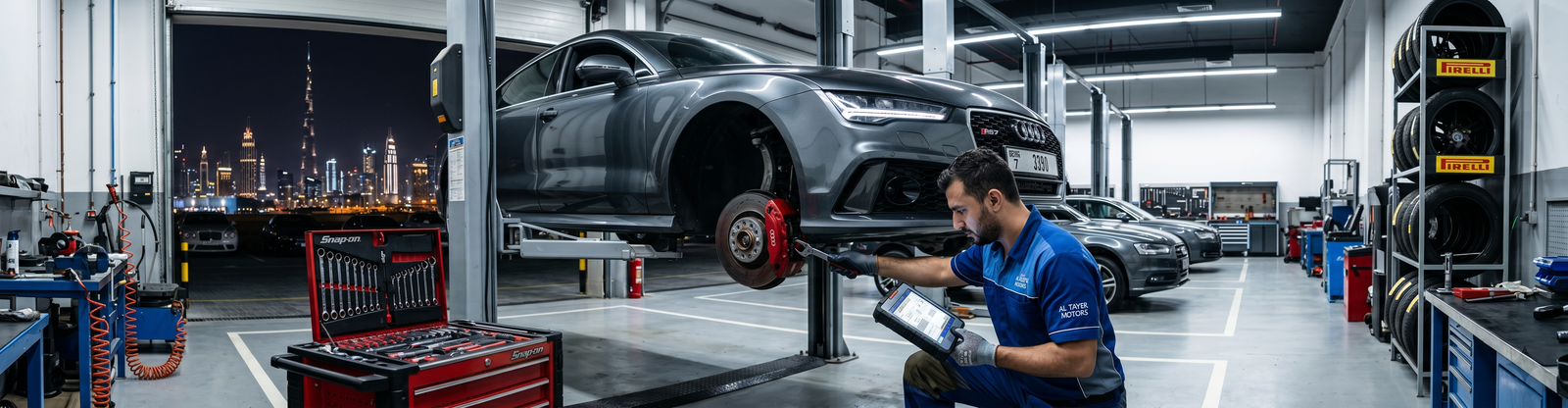


Why Is My Car Vibrating When I Apply the Brakes?
Imagine this: As you drive along the beautiful architecture of Downtown Dubai and navigate traffic with ease when suddenly the vehicle in front brakes. When you put your foot on the brake pedal an unsettling feeling takes over. The steering wheel vibrates violently between your fingers, the brake pedal pulses beneath your foot and the whole cabin starts to shake. This can turn a pleasant drive into an incredibly stressful and nerve-wracking experience. A Car
Vibrating high ways is not a minor inconvenience you can ignore; it's a warning sign your brake system is compromised. Your brakes will be your last line of defense in a city like Dubai, where traffic speeds can drop quickly from highway speeds. Ignoring the vibrations not only reduces your comfort, but also puts your safety in danger and can lead to costly repairs. Understanding the causes of this shaking will help you to regain a confident and smooth driving experience.
Car Vibrating - Brake Rotor Warpage & Thermal Distortion
Warped brake rotors are the most common cause of a vehicle shaking violently when braking. The brake rotors of your vehicle are the heavy metal disks that spin along with your wheels. The brake calipers apply pressure to the rubberized brakes pads as you depress the brake pedal. This creates heavy friction that brings your vehicle to a stop.
This friction produces a large amount of heat. If you live in a place where summer temperatures regularly exceed the thresholds for peak heat, it can be difficult to manage this thermal energy.
The temperature of the rotors increases dramatically when you brake continuously at high speeds. The metal will cool unevenly if you drive over a puddle after a hard braking session or if your rotor's cooling efficiency is compromised. The uneven, rapid thermal cycling causes the disc's perfectly flat surface to be distorted, creating microscopic waves or high spots. When you brake, these high spots are hit by the brake pads at thousands of revolutions per minute. This causes a rhythmic vibration that travels up your brake fluid line and into your pedal.
Uneven friction caused by Car Vibrating
The brake pads and calipers are responsible for a smooth stop. Brake pads wear evenly over many kilometers.
Further, brake calipers depend on small guide pins that allow them to move freely back and forth when you press the pedal and release it. Over time, road dust, grit and desert heat can dry out the protective grease that coats these pins. This causes the caliper seize. The brake pad will be pushed against the rotor in an unbalanced angle, or the pressure will continue on one side when the foot is not on the pedal. This localized friction causes hot spots to form on the rotor. This accelerates wear and can cause car shakes when braking.
Car Vibrating and Bad Wheel Alignment
The cause of your brake vibrations can sometimes be found outside the braking systems. The steering and suspension system of your vehicle works in harmony with the wheels to provide a balanced ride. Your tires won't travel in perfect parallel if your wheels have been misaligned by hitting a pothole, or clipping the curb. This misalignment may only cause a small drift under normal acceleration.
However, when you apply the brakes and drop anchor, the weight shift in the front amplifies this uneven tire tracking and causes the steering wheel shake.
In the same way, rubber bushings are used to hold suspension components in place. These bushings absorb road shock. These rubber components are prone to cracking and dry-rotting due to the extreme heat in the UAE. The metal control arm becomes loose when a suspension bushing splits. The wheel assembly shifts physically backward when the brake pedal is pressed hard. It vibrates in the suspension mount. The steering rack is immediately affected by this mechanical movement, which causes a noticeable tremor in the vehicle's cabin.
How delayed brake repairs compromise your total road safety - Car Vibrating
It's easy to dismiss a slight steering wheel shaking as a minor problem that can be put off until the next scheduled service. Delaying a professional mechanical diagnosis for a vibrational vehicle is a risk to your safety. If you feel a pulse or shudder, your brake pads may not be making flat, continuous contact with your brake rotors.
You temporarily lose friction every time your brake pads skim over a warped or glazed metal section. This results in increased stopping distances, meaning your vehicle will have to travel several meters more before it can come to a full stop.
The vibrations also act as a mini jackhammer to the front-end components of your car. The constant shaking destroys expensive low-profile tires, wears out steering tierods prematurely, and damages wheel bearings. If left unchecked, what starts out as a simple brake pad replacement or rotor refurbishment can snowball into a total suspension and steering overhaul that is incredibly costly.
Professional Garages Fix Car Vibrating
To fix a shaking car, you can skip the guesswork by using computerized precision tools. A technician at a car shakes when braking Dubai workshop will conduct a multipoint inspection on your vehicle.
Multipoint Digital Runout Testing
The technicians use a dial gauge, a tool of high precision, to measure "runout", the microscopic lateral deflection of the disc while it is spinning. The rotor will need to be replaced if the runout is more than a fractional millimeter over the factory specs.
Precision Rotor Machining vs. OEM Replacement
If you still have structural thickness on your brake rotors, a technician will use a brake lathe with precision to remove the high spots and restore a flat, smooth surface. If the rotors have been deeply grooved, cracked by heat, or are worn beyond their minimum thickness limit, the only option is to replace them with OEM components.
Caliper overhauls and premium lubricants
Professional mechanics will clean the caliper slides channels, replace the damaged dust boots and apply high-temperature silicone grease to the pins of the sliders. This will ensure fluid mechanical movement.
Conclusion - Car Vibrating
If you feel your car shake while driving on a busy highway, it's a sign that professional service is needed. If the vibration is caused by thermally damaged rotors or calipers that are stuck, or worn out suspension mounts, it's important to address the problem early. This will protect your vehicle and keep you safe.
A comprehensive brake diagnostic will ensure that your luxury vehicle maintains its factory-level stopping ability, predictability, and legendary comfort. Don't compromise your safety, or wait until a minor tremor becomes a mechanical failure. Book a brake inspection and wheel alignement check today to enjoy a smooth, vibration-free stop wherever you are.
Frequently Asked Questions – Car Vibrating
Why does my steering wheel shake only when I press the brake pedal?
When your steering wheel shakes exclusively during braking, it is a classic sign of warped front brake rotors. When the brake pads grip the uneven, thermally distorted surface of a warped rotor at high speeds, the pulsating mechanical friction travels directly up through your steering rack and columns, causing the steering wheel to shudder violently in your hands.
Can wheel misalignment cause a car shaking when braking Dubai highway speeds?
Yes. While bad wheel alignment typically causes a constant vehicle drift or a slight tremor while cruising, the forward weight shift during heavy braking forces your tires to fight against each other even harder. This sudden redistribution of energy drastically amplifies any existing wheel misalignment or suspension play, creating a severe case of car shaking when braking Dubai commuters frequently experience.
Is it safe to drive with a pulsating brake pedal?
It is not safe to ignore a pulsating brake pedal long-term. A pulsation indicates that your brake pads are making intermittent, uneven contact with the rotors rather than a firm, continuous grip. This reduces your overall friction and increases your vehicle's total stopping distance, which can prevent you from coming to a safe, immediate stop during an emergency traffic scenario.
What is the difference between resurfacing and replacing brake rotors?
Resurfacing (also known as skimming or machining) involves putting your brake rotors on a precision lathe to shave down high spots and restore a perfectly flat surface. This is a cost-effective option if the rotors have plenty of metal thickness left. However, if the rotors are deeply grooved, heat-cracked, or worn past their safe factory discard limit, they must be completely replaced with new OEM units.
How can I prevent my luxury car's brake rotors from warping?
The best way to prevent rotor warpage is to avoid continuous, heavy braking at high speeds followed by sudden stops, which causes severe thermal spikes. Additionally, never wash your car or drive through deep puddles immediately after a high-speed highway cruise; spraying cold water onto extremely hot brake discs causes rapid, uneven cooling, which instantly warps the metal.
Leave a comment
Your email address will not be published. Required fields are marked *